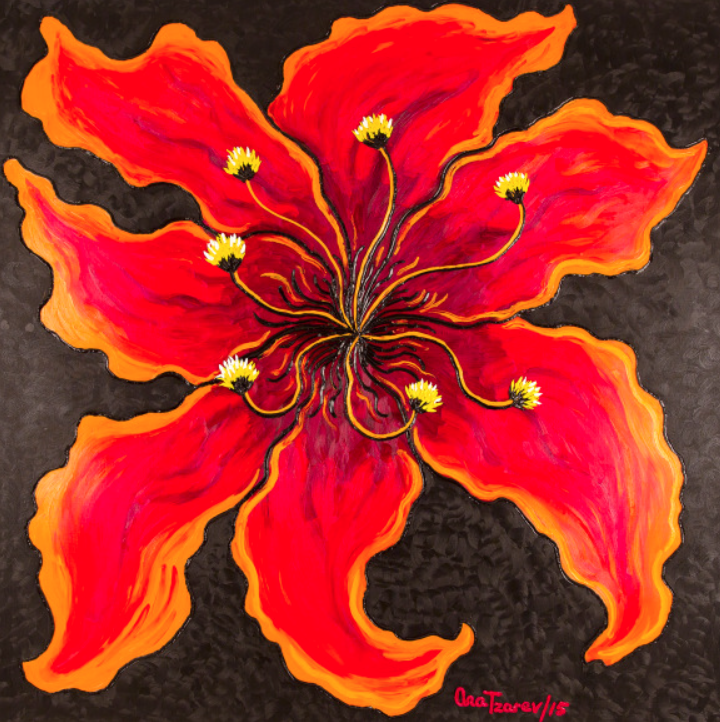
The painting to the left is a piece by Ana Tzarev. Most people would not think to identify whether a painting is digital or analog. They tend to associate digital and analog with technology. Even so, paintings can be considered analog because any color can be created. Tzarev uses a style of painting that is very blocky and three-dimensional due to her use of oil paints on linen. There isn’t any presence of color mixing, and the colors are contrasting. With the vibrancy of the colors in the painting, it can be assumed that the paint is being squeezed directly onto the canvas. The question then remains: in this case, does the painting remain analog? The answer is that the painting becomes digital because of the lack of color mixing. In the case of frequently used terminology, the original painting is the signal, and whatever happens to the painting over time can be considered noise.
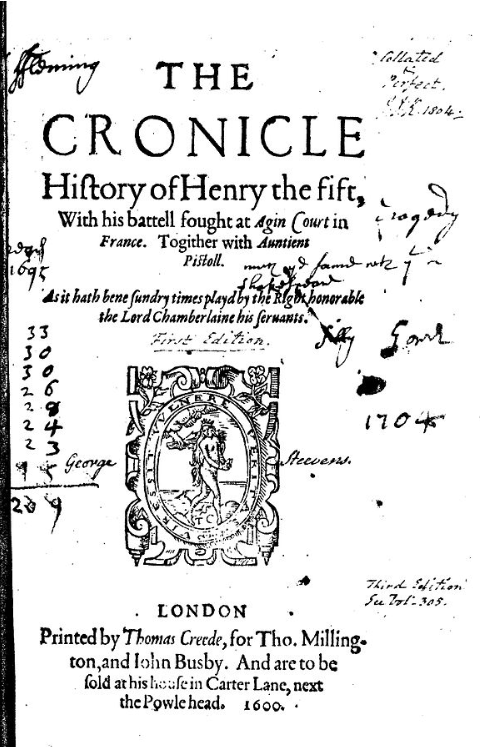
To the right is an image of one of Shakespeare’s play manuscripts. Looking at this image, it is clear that the writing and scribbles, which can be considered noise, can be removed with ease. Furthermore, it is apparent that the words cannot be changed. This implies that this medium can be considered digital due to the original content being preserved. Digital words do not change because they can tolerate a certain amount of noise. Too much noise can be considered equivalent to burning the manuscript. A key point of being digital is the ability to preserve the signal while getting rid of noise.
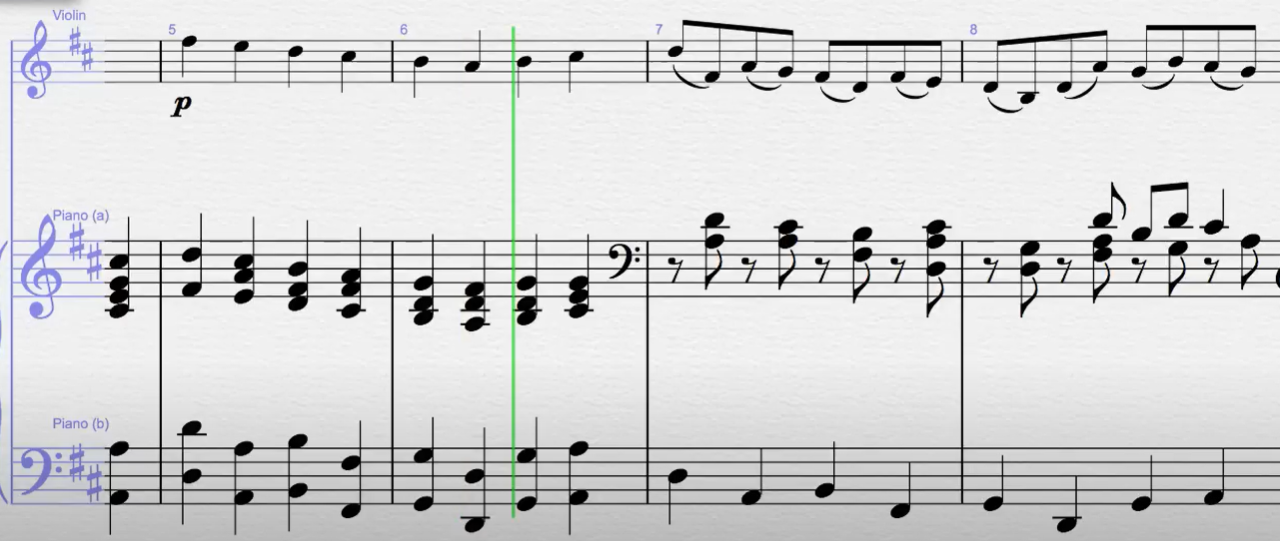
The image to the left is an example of sheet music. Some key observations about sheet music are that there is a defined number of notes. Furthermore, there are only so many combinations that can be created with this restricted amount of notes. Sheet music can be considered digital because only a certain number of notes exist. On the other hand, if the sheet music is performed, the performance can be considered analog because it can be altered based on the performer.
Texts were corrected for spelling and grammar using chatgpt 4o mini.