
Have you ever wondered how the phones we have now came to be? How did we manage to create tiny devices that we can carry around in our pockets and hold in our hands? How is it that we can suddenly communicate with people far away?
Maybe you aren’t asking all these questions, but now that I have prompted you, I’m sure you are!
So, let’s get into the facts:
During the invention of the telegraph, people were looking for a form of rapid communication. As you probably know, most folks would send messages by bird, horse, or even messenger. The message is considered digital since the alphabet does not change. On the other hand, during this time, the handwriting used to create these letters is considered analog. I don’t know about you, but it would take me a while to walk from Bristol to Providence. Thus began the hunt for a faster form of communication.

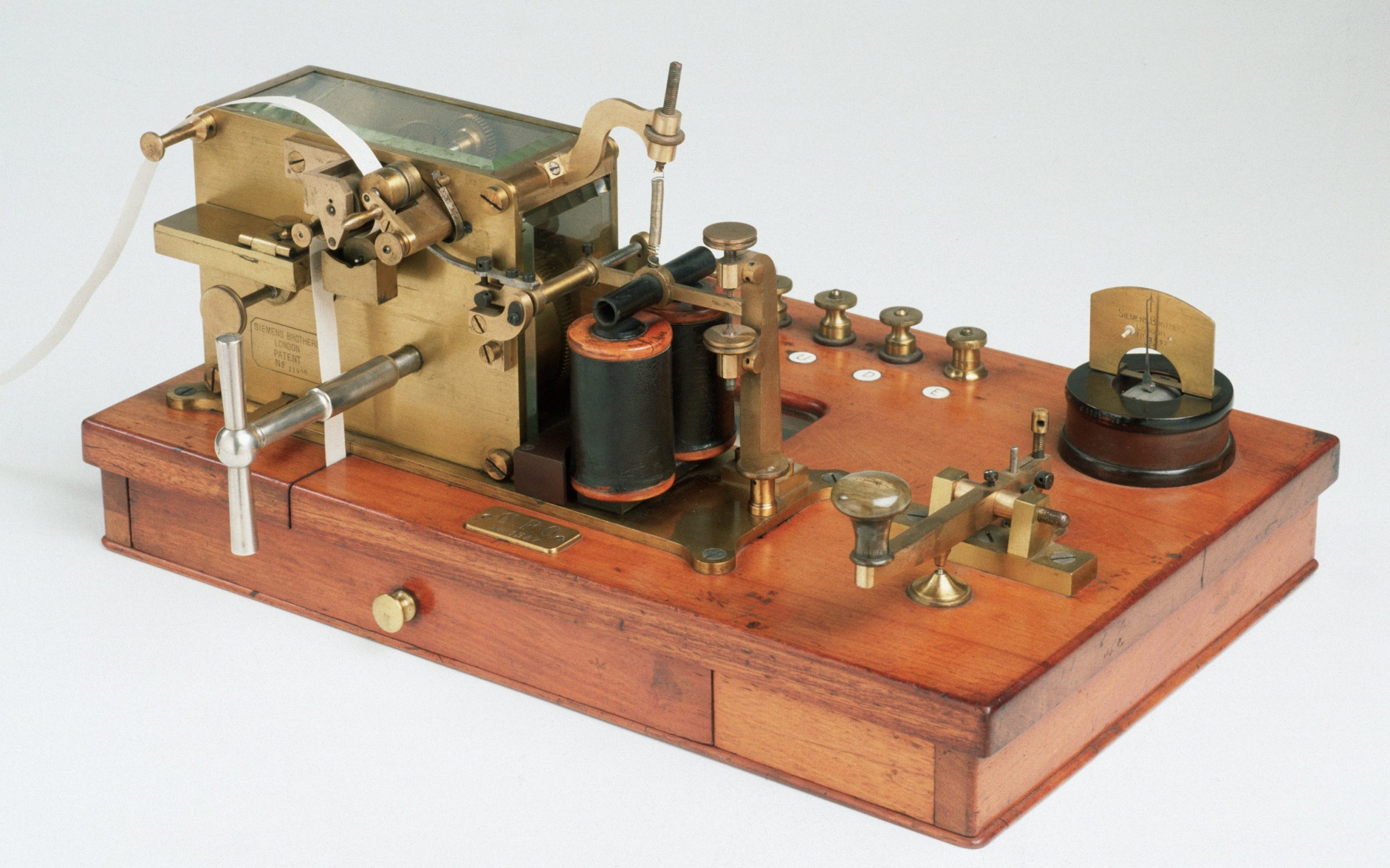
The telegraph arose from the need for speedier communication. The solution? A series of dots and dashes. They created a point-by-point messaging system using current through wires. For the first time, there was no need for the physical carrying of a message. In 1753, people began working on the telegraph. There are twenty-six letters, and each letter had a corresponding wire. Although there was potential for more, technology hadn’t advanced enough to handle newer ideas. In 1800, however, more advanced components began to be invented, such as the voltaic pile, which allowed for a constant electric current. The next step was to find a way to detect the current, which was done using an electromagnet. In 1838, the first telegraph was officially released, and in 1844, the first message was sent. By 1858, the first transatlantic wire was created. Morse code played a vital role in this invention because it was used to send messages using dots and dashes in set combinations, making this also a digital feature. This meant that, for the first time, people were able to communicate with different parts of the world more rapidly than they were used to. In 1870, the Graham Bell liquid telephone was created but was later deemed impractical in 1876, leading to the invention of the sentinel phone, which used a reverse of the electromagnet.
Corrected spelling and grammar using ChatGPT 4o mini